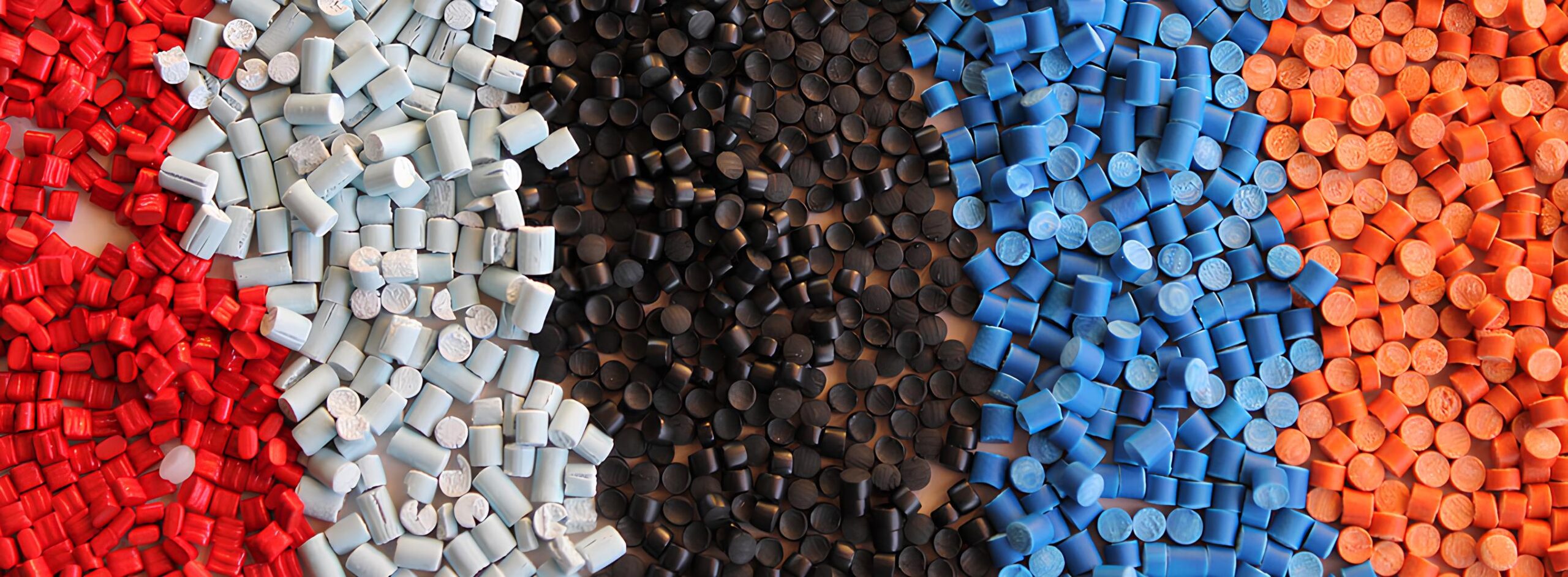
ABS (Acrylonitrile Butadiene Styrene) is one of the most widely used engineering plastics in modern industry. Known for its chemical resistance, impact strength, and excellent surface finish, ABS delivers outstanding performance in both technical and aesthetic applications. Its cost efficiency, easy processability, and excellent coloring capability make it an essential raw material across industries ranging from automotive and electronics to toys and household goods.
ABS is a copolymer plastic composed of three different monomers:
Together, these components make ABS a strong, flexible, and aesthetically suitable engineering material.
ABS offers excellent resistance to impact, making it suitable for both durable and flexible applications.
Thanks to acrylonitrile content, ABS can withstand elevated temperatures and shows resistance to many chemicals.
ABS can be easily processed via injection molding, extrusion, and 3D printing. It maintains dimensional stability with low shrinkage during production.
The styrene component provides a high-quality aesthetic finish. ABS is also easy to paint and color.
ABS has a low density, making it lightweight while maintaining high mechanical strength.
ABS granules are widely used across various industries due to their versatile performance:
ABS is the main material used in LEGO-type products due to its impact resistance and dimensional stability, ensuring safe and durable toy production.
ABS can be modified with different additives depending on application requirements:
Used for products requiring superior toughness and durability.
Designed for applications exposed to high temperatures.
Developed for electrical and electronic components requiring safety and stability.
Used in applications requiring premium aesthetic surfaces.
ABS is an ideal material for industries seeking reliable, lightweight, and durable production solutions.
ABS Plastic – Acrylonitrile Butadiene Styrene is one of the most valuable engineering plastics, offering a unique combination of durability, processability, and aesthetic quality. Its chemical structure enables high performance in both functional and precision applications. With its wide usage range, cost efficiency, and strong mechanical properties, ABS holds a critical position in modern industrial manufacturing.



sezaiozmen@ydspolymer.com
+90 532 568 9357
2 Yazovirska Str. 6600 Kardzhali / Bulgaria